Entering the UAE market as an overseas business requires careful preparation, especially regarding banking readiness. Companies must ensure they are adequately equipped to meet the expectations and requirements of UAE financial institutions. Here’s how to get prepared for the banking landscape in the UAE.
What is Banking Readiness?
Banking readiness involves the necessary preparations that a business must undertake to successfully open and operate a corporate bank account in the UAE. This includes documentation, understanding the KYC (Know Your Customer) requirements, and effectively presenting the business profile to prospective banks.
Key Steps for Banking Readiness
1. Understanding the Banking Environment
- Research Local Banks: Familiarize yourself with various banks in the UAE. Evaluate their offerings, sizes, services, and fees. Some banks specialize in certain business types or sizes, so select one that aligns with your activities.
- KYC Regulations: All banks have stringent KYC regulations. Understand what documents and information will be needed, including proof of identity, business ownership details, and any operational contracts.
2. Preparing Documentation
- Corporate Documents: Ensure that your business registration documents, including trade license, certificate of incorporation, and Memorandum of Association, are in order. These documents form the backbone of your bank’s due diligence process.
- KYC Documents: Prepare the necessary KYC files, which generally include:
- A detailed business plan outlining your activities, projected revenues, and client base.
- Personal identification documents for all shareholders and directors.
- Proof of business address (e.g., rental agreements).
3. Creating a Comprehensive Business Profile
- Business Plan: Develop a business plan that includes detailed information about the nature of your business and intended banking activities. Highlight your expected transaction volume and types of transactions.
- Financial Projections: Providing financial forecasts can build credibility. Prepare a three to five-year financial projection detailing expected revenues and expenses.
4. Choosing the Right Banking Account
- Assess whether you need a basic business account or a more specialized account (e.g., for trading, e-commerce). Different banks offer varied services, fees, and account types, so ensure you know what suits your business model.
5. Seeking Professional Assistance
- Advisory Services: Consider consulting with firms specializing in UAE company formation and banking readiness, such as Global Business Zone. These firms can help organize your documents and ensure that your application process is smooth and efficient.
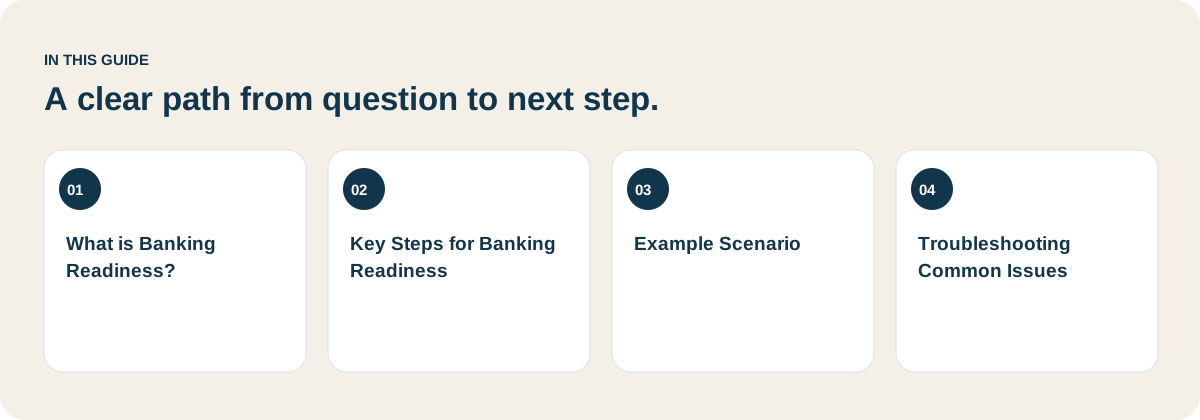
Example Scenario
Let’s say a tech startup from Germany decides to enter the UAE market. The company must:
- Research banks like Emirates NBD and Abu Dhabi Commercial Bank (ADCB) to find which offers services tailored to tech businesses.
- Prepare its documentation - including its trade license, certificate of incorporation, and a comprehensive business plan outlining its tech services.
- Maintain close communication with advisors at a firm like Global Business Zone to ensure everything is ready for bank onboarding and to anticipate potential problems.
Troubleshooting Common Issues
Document Rejection
If your documentation is rejected, ensure:
- All scanned documents are clear and legible.
- That you have provided all requested information.
- Double-check for any missing signatures or notary stamps.
Delayed Approvals
Extensions in timelines can occur:
- Regularly follow up with your banking representative to get updates.
- Ensure that you have promptly submitted any additional information they request.
Non-compliance Flags
If a bank flags compliance issues:
- Revise your KYC documents and include additional clarifications if required.
- Understand the specific compliance concerns and address them accordingly.
Conclusion
Banking readiness is a critical aspect of entering the UAE market. Understanding the banking environment, preparing the necessary documentation, and seeking expert guidance can significantly ease the onboarding process. By adopting a proactive and organized approach, international businesses can enhance their banking readiness in the UAE.